
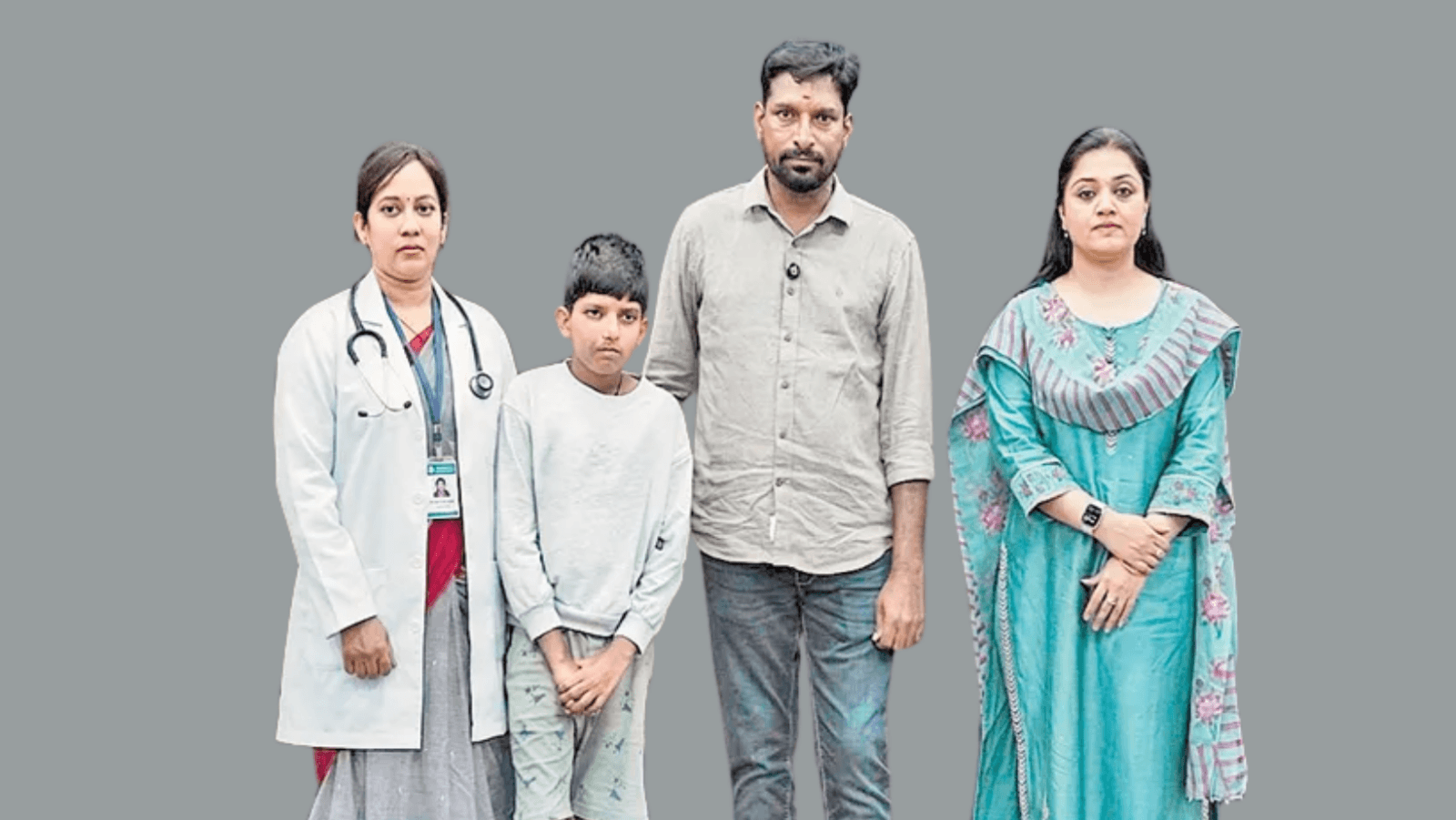
STAR Hospital Nanakramguda has successfully performed a complex facial reconstructive surgery on a 10-year-old boy diagnosed with facial infiltrating lipomatosis. The procedure addressed a rare condition that causes fatty tissue to infiltrate facial muscles and surrounding soft tissue.
Medical literature classifies facial infiltrating lipomatosis as an ultra-rare disorder. The condition affects fewer than one in one million people worldwide. It often results in facial asymmetry and functional impairment, making diagnosis and treatment highly specialised.
Multidisciplinary planning guided treatment
Dr BRN Padmini, Senior Consultant, Department of Plastic, Reconstructive and Aesthetic Surgery, led the surgical team. The procedure required detailed planning to achieve functional restoration while preserving critical facial structures. The patient’s parents first noticed swelling in the chin region when the child was three years old. The swelling gradually progressed over the following years. The family later sought specialised care at STAR Hospital Nanakramguda.
Following a comprehensive clinical evaluation, Dr Padmini diagnosed the patient with facial infiltrating lipomatosis. She explained that the condition differs significantly from a conventional lipoma.
“The condition is not a typical lipoma,” said Dr Padmini. “The surgery requires careful planning because surgeons must remove abnormal tissue while protecting facial nerves. They must also preserve muscle function and improve facial symmetry.”
Procedure prioritised function and symmetry
The surgical team developed a customised treatment strategy before the procedure. The plan prioritised functional preservation alongside reconstructive correction. The team carefully removed infiltrating fatty tissue while protecting vital nerves and surrounding anatomical structures.
The surgeons preserved muscle function throughout the operation. They also worked to improve facial symmetry and restore oral competence. Every stage of the procedure demanded precision because facial nerves control speech, facial movement and expression.
Facial infiltrating lipomatosis presents significant reconstructive challenges. The abnormal fatty tissue extends into healthy muscles and soft tissues. This growth pattern increases surgical complexity and limits the scope for complete tissue removal.
The surgical team therefore focused on balancing disease management with long-term functional outcomes. This approach reduced the risk of nerve injury while delivering meaningful reconstructive improvement.
Case highlights specialised reconstructive expertise
The successful procedure enhanced both facial appearance and functional capability. It also demonstrated the role of multidisciplinary planning in managing complex craniofacial conditions.
STAR Hospital said the case reflects its capabilities in advanced plastic and reconstructive surgery. The hospital continues to strengthen its expertise in treating rare congenital and developmental facial disorders through specialised surgical interventions.
Healthcare experts advise parents to seek timely medical evaluation for persistent facial swelling in children. Early diagnosis enables appropriate treatment planning and improves long-term clinical outcomes, particularly for rare disorders requiring multidisciplinary care.