
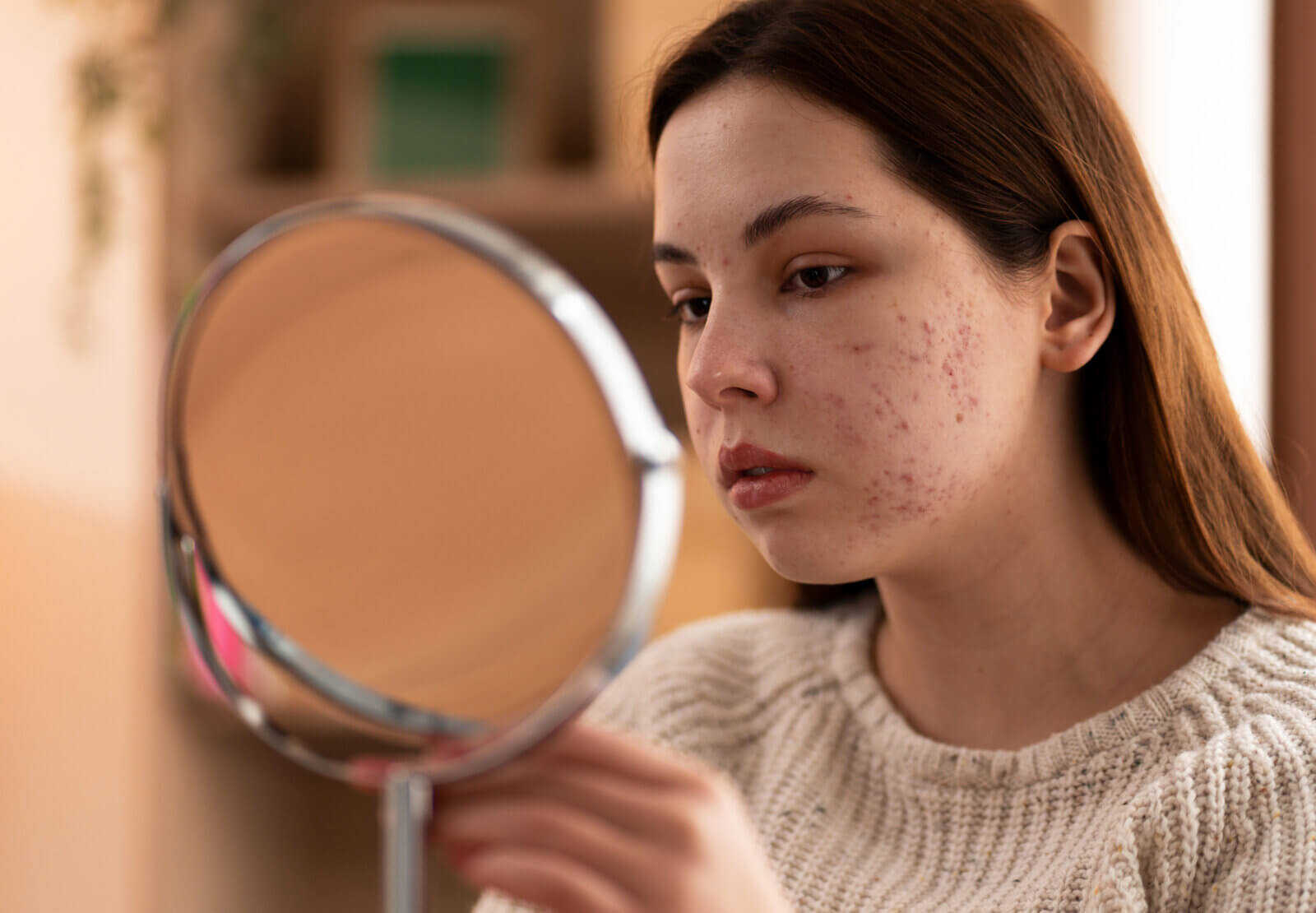
Hormonal fluctuations wield significant influence over dermatological concerns in the realms of skin health, weight management, and hair vitality. These intricate hormonal dynamics link with dermatology. Hormonal imbalances can contribute to skin issues such as acne, dryness, and premature ageing by affecting sebum production and collagen levels. In addition, they play a pivotal role in metabolic processes, influencing body weight and the challenges of weight management. The influence extends to hair health, resulting in concerns like hair loss, thinning, and alterations in texture. Dermatologists should be well-versed in managing these hormone-related aspects to optimise patients’ overall well-being and appearance.
Hormonal imbalances, such as increased androgens (male hormones) or fluctuations in estrogen levels, can stimulate the sebaceous glands to produce excess oil. This can lead to clogged pores and acne breakouts, particularly along the jawline and chin.
Hormones also affect collagen production, which can impact skin elasticity and contribute to wrinkles and sagging over time. What’s more, hormonal imbalances, such as elevated androgens. This can cause hair thinning and lead to conditions like hirsutism (excessive facial and body hair) or male-pattern baldness. Whereas hormones like estrogen promote shinier and thicker hair, any imbalances can affect hair texture and appearance. Hormonal fluctuations during the menstrual cycle, pregnancy, and menopause can impact breast size and tenderness. Estrogen and progesterone play key roles in these changes.
Hormonal fluctuations can have significant effects on skin health, weight management, and hair health. Different life stages can trigger hormonal changes that bring up these changes.
Hormonal shifts, such as those during puberty, pregnancy, and menopause, can lead to increased oil production and acne. Elevated androgens can stimulate the sebaceous glands, resulting in clogged pores and breakouts. During menopause, declining estrogen levels can lead to reduced collagen production, contributing to thinning skin and wrinkles.
Managing hormonal fluctuations often involves a combination of lifestyle changes and medications. In some cases, consultation with a dermatologist may be required. Aesthetic medicine treatments can effectively address issues related to hormonal changes in several ways. These treatments focus on improving the appearance and overall wellness of individuals during hormonal transitions.
A holistic approach to skin and hair health considers the interconnected factors that influence these aspects of well-being. It contributes to better patient outcomes in several ways. Such as identifying underlying causes, personalised treatment plans, stress reduction, nutritional support, lifestyle modifications, and preventive care.
A holistic approach to skin and hair health takes into account the interconnected factors. These factors influence the aspects of appearance and well-being. Addressing underlying causes, promoting overall health, and offering personalised care, can lead to better patient outcomes, healthier skin, and improved hair condition. Overall, a holistic approach in aesthetic medicine aims to optimise not only the physical appearance but also the patient’s mental and emotional well-being. It aims at potentially leading to more successful and fulfilling outcomes.
Dermatologists must possess comprehensive knowledge and strategies for managing hormone-related aspects. This helps to enhance overall patient well-being and appearance, concludes Shriyal Sethumadhavan. For a full story and more details on the concerns and treatments shared by experienced dermatologists; such as Dr Sudha Vani Damarla, Dr Akanksha Singh Cornuit, and Dr Indu Balani, get your copy of the magazine here: Aesthetic Medicine India Aug-Sept issue | Powered by Pocketmags