
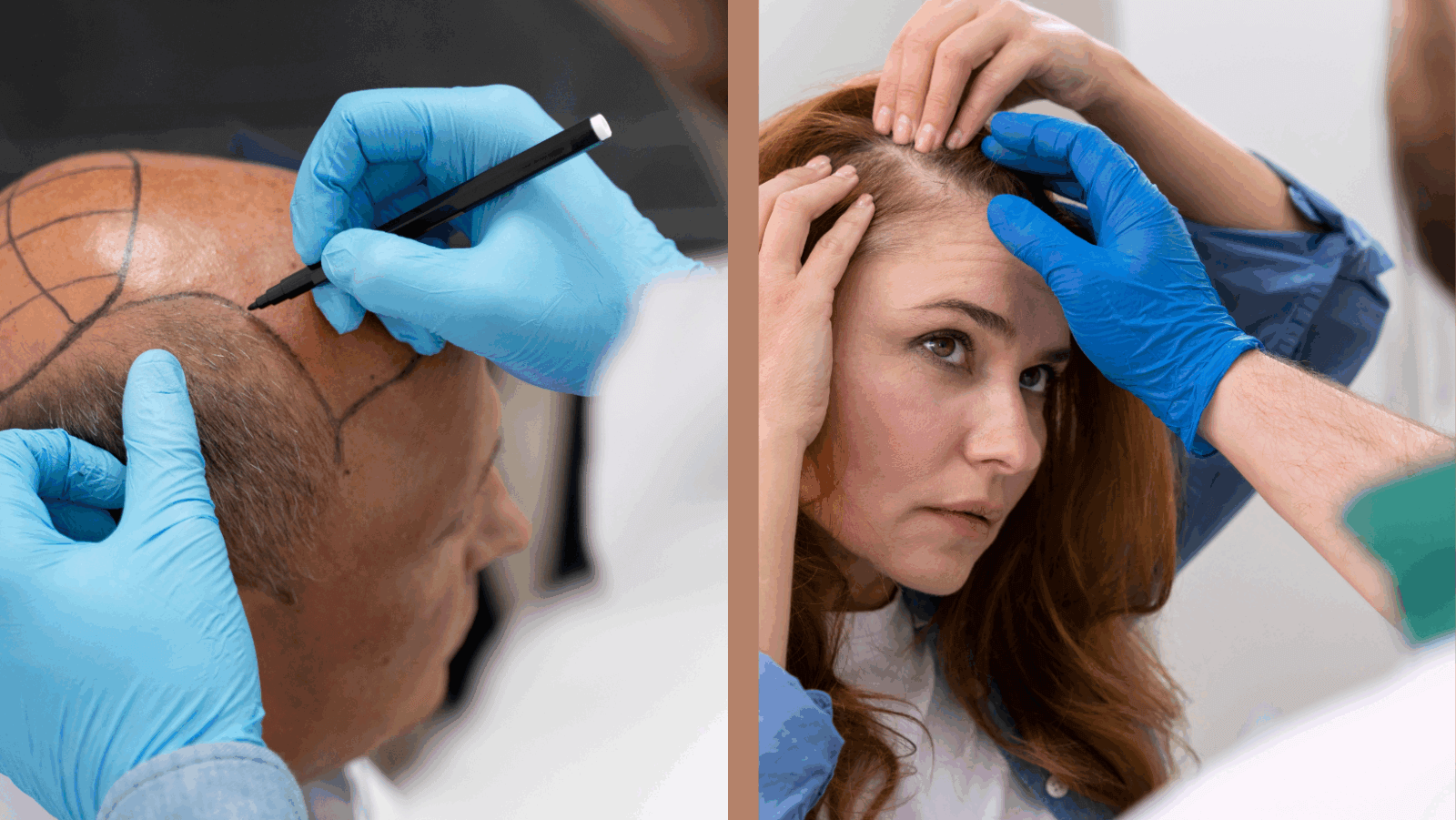
Experts emphasise that there are key differences in hair transplant procedures for men and women. Dr Mayank Singh, President of AHRS, asserts that understanding these differences is essential.
Hair loss affects both men and women, often impacting self-esteem and emotional well-being. However, the way hair thinning presents itself varies widely.
Hair loss patterns differ sharply between genders
In men, hair loss typically follows a predictable pattern—starting with a receding hairline and progressing to thinning at the crown. This structured pattern makes it easier for surgeons to identify stable donor areas on the sides and back of the scalp. These regions are usually genetically resistant to balding, making them reliable for transplant procedures.
Women, on the other hand, commonly experience diffuse thinning across the scalp rather than clearly defined bald patches. In many cases, even the donor area may show thinning, making the selection of safe donor follicles more challenging. Dr Mayank notes that this is why female hair transplants require more detailed evaluation and planning to ensure successful results.
Understanding the surgical techniques
Two primary techniques are used in hair restoration—Follicular Unit Excision (FUE) and Follicular Unit Transplantation (FUT).
FUE involves extracting individual follicles from the donor area and implanting them into thinning or bald regions. The technique is minimally invasive, offers faster healing, and leaves no visible linear scar.
FUT requires removing a thin strip of scalp from the donor area and dissecting it into individual grafts under a microscope. FUT offers dense coverage for aesthetic zones like the hairline, despite a potential scar if hair is shaved.
Why the female hair transplant experience is unique
Dr Mayank explains that female hair transplant planning is considerably more complex. Most women undergoing the procedure do so to increase overall hair density rather than recreate a receding hairline. He performs unshaven hair transplants to ensure discretion, as women typically do not shave their heads. Within a week, most signs of surgery are no longer visible.
There are also key differences in hairline design between genders. Men seek defined, masculine hairlines; women require softer, curved hairlines that complement facial features.
Ideal candidates for female hair transplant
Not all women experiencing thinning hair are suitable candidates. Ideal cases include women with traction alopecia, injuries, or thinning who maintain stable donor areas. Surgeons also treat women seeking forehead reduction for better aesthetic balance. Surgeons typically conduct detailed assessments before recommending a transplant.
A growing path to restored confidence
While hair loss can be emotionally distressing, modern surgical solutions offer highly effective outcomes. Individuals need to learn about available options, understand their unique hair patterns and the key differences in treatment, and seek expert consultation.