
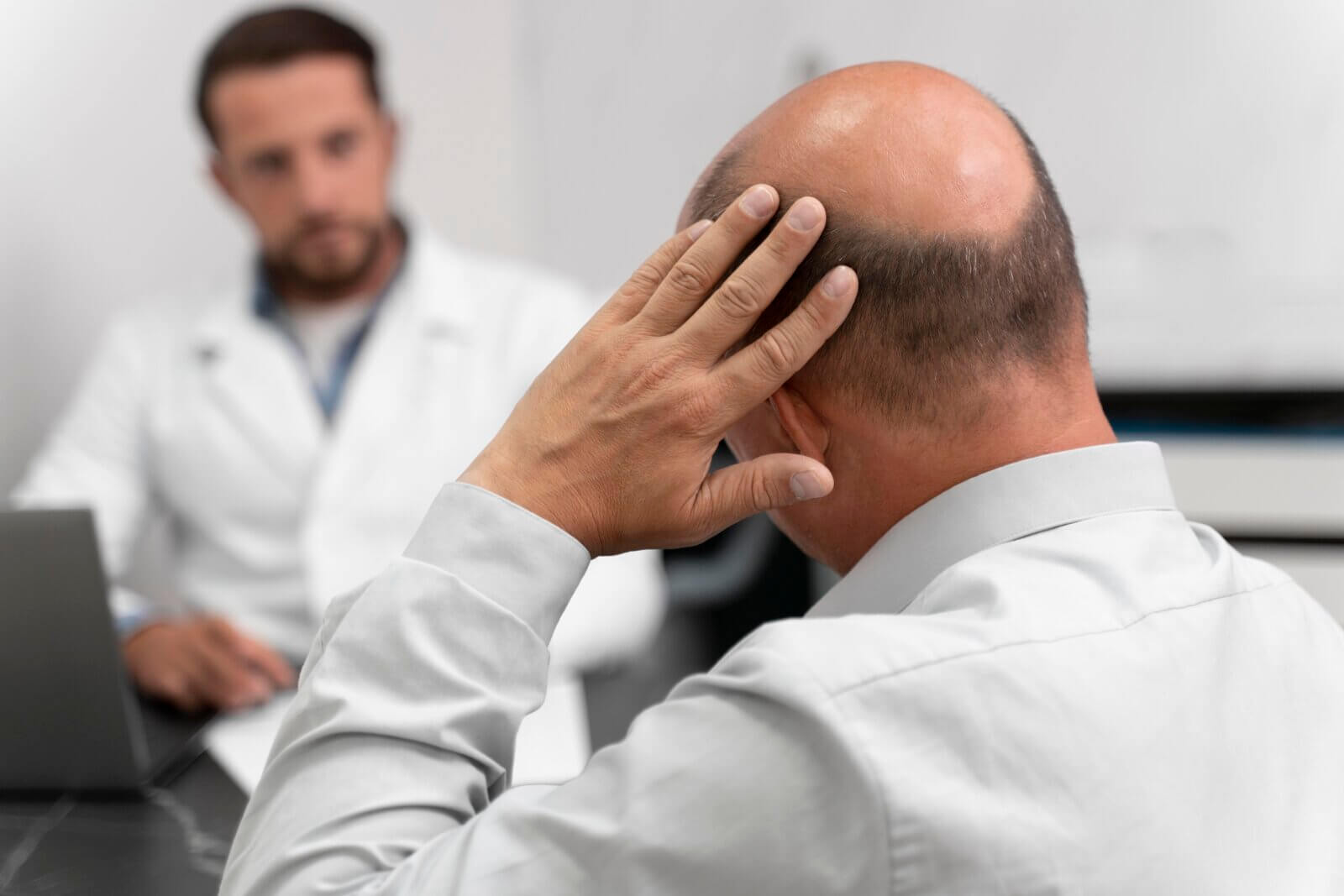
Hormones have a close association with hair growth, which is why they have a huge impact on hair cycle and hair follicle structure.
Androgen hormones, also referred to as “male” hormones, like DHEA and testosterone, play the largest role in overall hair growth. High hormone levels can cause excess hair growth, especially on the body or face. However, when the hormone levels drop, the reverse occurs and can lead to thinning hair and even hair loss.” He adds that the hormones produced by the thyroid also play an important role in hair growth and hair loss. When the thyroid is not active enough (hypothyroidism), the metabolism slows. And to compensate, the body begins to shut down “less important” functions, such as hair growth. (Hypothyroidism causes a decrease in anagen frequency, and causes hair thinning).
Androgens have a direct effect on the androgen-dependent hair on the scalp. High androgen levels as well as increased androgen receptor sensitivity can both lead to down regulation of androgen-dependent hair. This can happen even with normal circulating androgen levels. The 5-alpha reductase enzyme’s high activity causes androgenic hair loss by converting testosterone into its active form, 5 DHT. Thyroid hormones maintain normal hair follicle function, health, and support keratinocyte and melanocyte proliferation in the follicles. Therefore, a deficiency of thyroid hormones can lead to diffuse hair loss. High levels of thyroid hormone as seen in hyperthyroidism can also lead to diffuse alopecia. The reason for this, however, is unknown. Autoimmune thyroiditis can also co-exist with alopecia areata a known T cell-mediated auto immune condition.
Several hormones, including thyroid hormones, dihydrotestosterone (DHT), estrogen, and testosterone, have been shown to impact the hair cycle and mediate hair growth.
However, platelet-rich plasma (PRP) and other regenerative therapies are universal stimulators of hair growth. Although these are not specific for hormonal hair loss and do not target the pathological process, they can stimulate hair growth in any situation, and so they do help as useful adjuvants. Aesthetic treatments like mesotherapy and PRP (or its advanced version GFC) are important for several reasons such as stopping hair loss, thicken existing hair, and promote new hair growth.
Hair loss worries both men and women, and it can be influenced by various factors such as heredity, hormone imbalances, and dietary inadequacies. Among these elements, androgens and thyroid hormones are vital in controlling hair development, and healthy eating can improve hair health.
Dr. Archana Batra, a dietitian, and certified diabetes educator, shares tips for a healthy diet. Meanwhile, Dr. Pankaj Chaturvedi, Dr. Anil Ganjoo, and Dr. Ishan Sardesai delve into the details of hair fall treatments based on their experience. In the full story, Shriyal Sethumadhavan explores addressing the issue of hair fall through aesthetic treatments and nutrition. To get the complete details, secure your copy of Aesthetic Medicine India, by clicking on this link: https://rebrand.ly/aug-septedition