

Design for aesthetic clinics requires a unique approach because we are not dealing with traditional patients. Unlike conventional healthcare, where patient care dominates, aesthetic practices cater to users and consumers.
These individuals seek cosmetic enhancements much like shoppers browsing for services in a retail store. With that in mind, here are five important aspects that influence clinic design from a functional and experiential standpoint.
Consumers’ need for an experience
When designing a clinic, it is important to view users not as patients in the traditional sense but as consumers – individuals seeking a curated, comfortable, and impactful experience. Much like shoppers in a retail space, these users are influenced by how a clinic feels, functions, and flows. Their expectations can be categorised into three broad aspects:
- Functional efficiency
The first expectation is functional – whether the facility offers all treatments in a cohesive setup. Often, clinics take up units on different floors or scattered spaces, making it inconvenient for users to navigate. A well-designed space should allow for consolidated services under one roof, streamlining care and movement. Functional viability also supports staff efficiency and enhances the overall experience by minimising friction in service delivery.
- Ergonomic comfort
Next is ergonomics. This includes attention to small but crucial details such as the height of the treatment table, sufficient movement space around equipment, and smooth circulation paths for both staff and consumers. When these elements are thoughtfully addressed, they create a seamless and comfortable interaction for everyone involved – improving both user satisfaction and caregiver efficiency.
- Psychological influence
Lastly, the psychological impact of the space plays a critical role. Design elements such as ceiling height, lighting, and spatial layout influence how users feel. Large volumes can create a sense of openness and ease – much like airports that are designed to inspire a sense of journey. On the other hand, compact and intimate spaces like temple interiors invoke introspection and reverence. Your clinic design should use such psychological cues to build trust and comfort.
Lighting, in particular, is a powerful design tool. The right lighting enhances the ambience, influences mood, and highlights key design elements, making spaces more inviting. In aesthetic clinics, lighting can be used not only for functionality but also to subtly reinforce the clinic’s brand identity and the emotional experience for the user.
Future-ready design strategies
Designing for the future is not just about aesthetics – it is about user safety, comfort, efficiency, and adaptability. Based on real-world experience, here are six key strategies to make clinics future-ready:
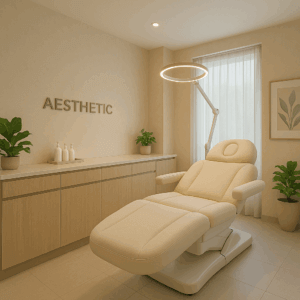
- Safety by design
Safety is paramount, especially in aesthetic clinics where gels and other materials are frequently used. Flooring materials and furniture design must minimise the risk of slips or falls. Rounded edges, anti-skid flooring, and clutter-free circulation areas are essential for user and caregiver well-being.
- Prioritising privacy
Privacy is a non-negotiable aspect. The layout should ensure discreet access to treatment rooms, limit unnecessary visibility, and provide visual and acoustic isolation. The use of CCTV, where relevant, must also be thoughtfully planned – balancing security with confidentiality.
- Creating positivity through design
Many users arrive with anxiety. Themed interiors, soft textures, and thoughtfully placed visual elements can help create a calming, engaging environment that keeps users occupied and relaxed while they wait.
- Sterility and compliance
Sterility standards similar to healthcare must be maintained to ensure hygienic procedures. Following NABH or international norms not only ensures safety but also builds credibility. Planning for sterile storage, handwashing zones, and contamination-free zones is critical.
- Designing for flexibility
Fluctuating patient inflow calls for adaptable spaces. Multipurpose rooms that can be used for different treatments or counselling during peak times improve operational efficiency and optimise space utilisation.
- Lighting and acoustics
Lighting has a profound impact on how users experience a space. Use a mix of ambient, task, and accent lighting, including tunable fixtures that can mimic daylight where natural light is limited. Acoustics are equally important – soundproofing enhances comfort and confidentiality for both patients and staff.
Elevating the space
Beyond functional aspects, the following elements can greatly enhance the sensory experience:
- Natural light and circadian rhythm: Where possible, maximise natural light. When that is not feasible, choose artificial lighting that simulates daylight to help maintain circadian rhythms, reduce fatigue, and promote wellness.
- Proportion and volume: Spatial proportions significantly influence mood. Avoid narrow or low-ceilinged rooms, which can feel claustrophobic. Balanced proportions and generous volume help users feel comfortable and at ease.
- Colour psychology and neuroaesthetics: Neutral tones may be trending globally, but Indian users respond deeply to colour. Smart use of warm and cool shades, aligned with neuroaesthetic principles, can elevate mood, reduce anxiety, and support healing. In mental health facilities, colour strategy has proven especially impactful.
- Textures, patterns and art: While treatment areas should remain minimal, waiting zones and consultation spaces can benefit from textured surfaces, patterns, and curated artwork. These add character, break monotony, and offer focal points that subtly engage and distract users.
- User-controlled comfort: Give users a sense of control over their environment. Adjustable lighting (tunable white fixtures, dimmable lights), soundproofed rooms, and temperature control contribute significantly to comfort. Noise reduction – whether from street traffic or adjoining rooms – should be tackled using proper insulation, acoustic ceilings, or noise-absorbing panels.
- Biophilic Design: Incorporating indoor plants (non-allergenic and easy to maintain) not only enhances aesthetics but also improves indoor air quality and promotes healing. Even views of greenery outside have been shown to aid recovery and reduce stress.
- Amplifying through social media: Design-driven spaces naturally become Instagram-worthy. Visitors often leave reviews commenting on interiors, giving your brand visibility through their content – without additional effort.
- Bridging wellness and healthcare: Modern consumers seek integrated services – wellness and corrective treatments under one roof. A seamless design language that aligns both offerings can enhance perception and drive footfall.
- Tech integration and automation: Smart features like switchable privacy glass, call bell systems, automated lights, blinds, and temperature control enhance time efficiency and elevate user experience. As homes get smarter, users expect similar sophistication in commercial and clinic spaces.
Proven expertise
With over 15 years of experience and more than 15 lakh sq ft of clinic, wellness, and healthcare spaces designed, our studios in Mumbai and Pune continue to evolve. Our design ethos adapts to purpose, always blending from with function.
About the author: Ar Kshititi Nagarkar is the Principal Architect of Shree Designs. She is a seasoned architect with over 26 years of experience. As the founder of Shree Designs, she has led over 30 diverse healthcare projects across the private and government sectors. With a strong philosophy of “Creating Healing Spaces”, she specialises in innovative, sustainable, and NABH-compliant healthcare design. A recognised leader, she received the Woman of Excellence Award from the Indian Achievers Forum.