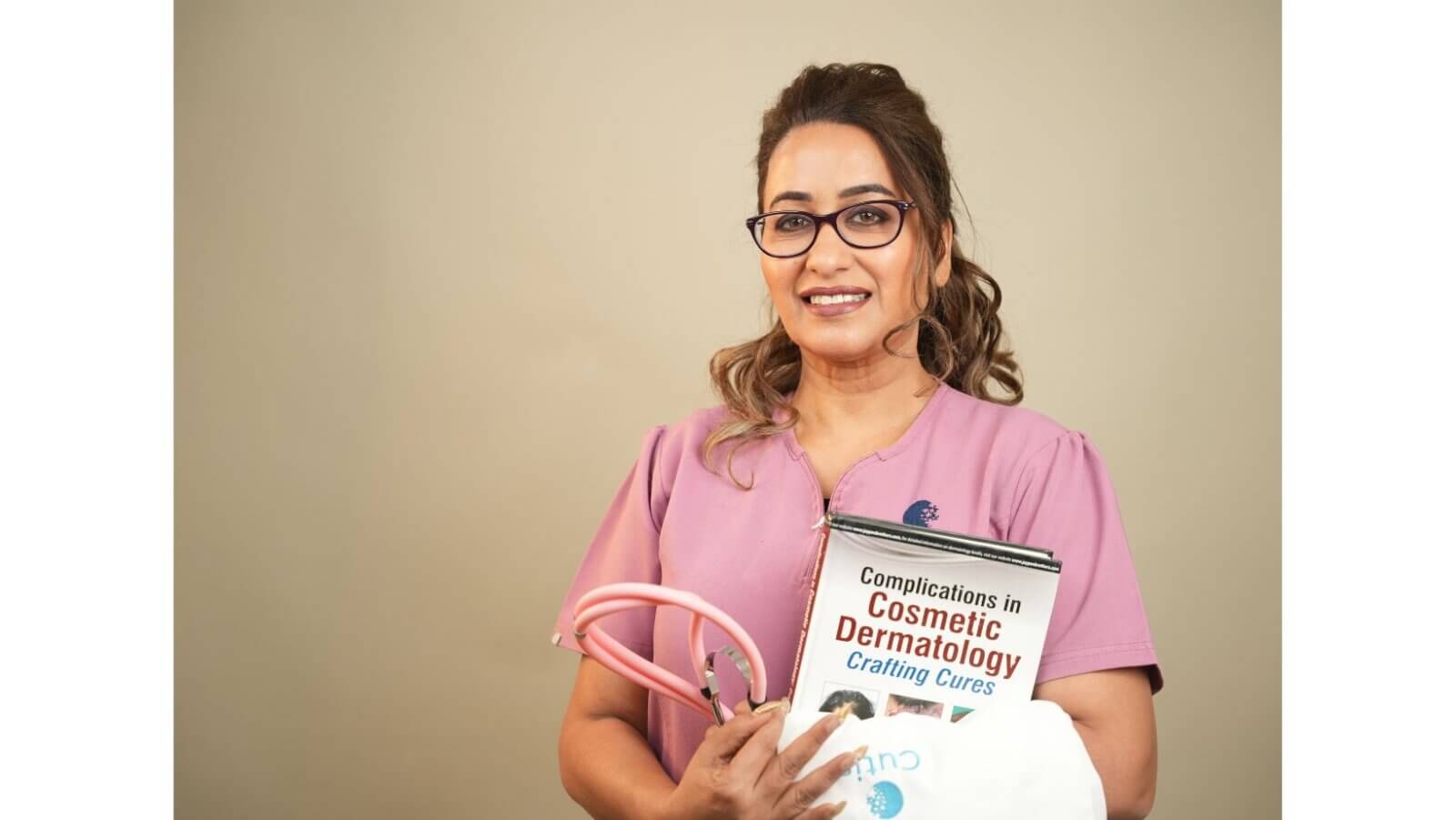
In an industry where clinical expertise is increasingly intersecting with consumer-driven innovation, Dr Apratim Goel, Founder, Cutis Skin Solution and OlaDerm Skincare, stands out as a practitioner who has successfully bridged both worlds. With more than two decades of experience in dermatology and aesthetic medicine, she has built Cutis Skin Solution into a trusted name rooted in ethical practice and patient-centric care. Her journey reflects a deeper understanding of aesthetics – not merely as a tool for physical enhancement but as a means to restore confidence and emotional well-being.
This philosophy has now extended beyond the clinic with the launch of Ola Derm, a science-backed skincare line developed to bridge the gap between in-clinic treatments and everyday routines. At a time when patients are more informed yet increasingly influenced by trends, Dr Apratim’s approach remains grounded in authenticity, long-term outcomes, and clinical integrity. In this conversation with Aesthetic Medicine India Editor Shriyal Sethumadhavan, she reflects on her evolution from clinician to entrepreneur, the changing dynamics of patient expectations, and what it truly takes to build a credible, future-ready aesthetic practice in India.
Looking back at your early years in dermatology, what experiences or patient interactions played a defining role in shaping your interest in aesthetic medicine?
Looking back at my early years, when I started my practice in 2000, I realised that patients were not coming only to treat their skin – they wanted to be heard and regain their confidence. Often, it was also a way for them to express themselves and be listened to.
Many cases of acne, scars, pigmentation, and wrinkles were deeply affecting patients’ self-esteem and how they perceived themselves. That is when I understood that dermatology is not just a medical practice – it is also emotional and involves a strong element of psycho-counselling. This shaped my interest in aesthetics, with a focus on helping people feel better, not just look better.
For example, patients coming in for acne or melasma would often talk about avoiding social functions, not meeting friends, or feeling that makeup does not suit them. At times, I would use simple tools like concealers during the consultation to show them an immediate improvement. Their reaction – feeling better instantly – highlighted the importance of that connection.
Over time, I realised that it is not just about seeing multiple patients a day but about building meaningful connections that continue across visits. That, in essence, shaped my aesthetic practice.
Cutis Skin Solutions has grown into a recognised aesthetic practice. What were some of the toughest challenges in building clinical trust and positioning your practice in an increasingly competitive market?
Cutis Skin Solutions is more than two decades old, so there were several challenges. The first and foremost was funding – laser machines are expensive and require significant investment. Initially, I worked in a partnership and later moved to working independently, which meant that decision-making was not entirely in my control in the early years.
The second challenge was building clinical trust in a market driven by quick fixes. Patients often had too many options, many of which made unrealistic promises, leading to confusion. I chose to focus on honesty, consistency, and long-term results. While this approach may have slowed growth, it was a conscious decision.
There was also the issue of over-promising in the market – for example, claims that melasma could be resolved in a few sessions. In reality, conditions like melasma can recur and require ongoing management. I chose authenticity over such marketing hype.
Another challenge showed up when we started branches of Cutis. I had to be present everywhere since I was the face of the brand, which was difficult.
These were some of the key challenges, particularly in the initial years, even if it meant slower growth.
Having witnessed the transformation of the aesthetic industry in India, how have patient expectations, treatment preferences and practitioner responsibilities evolved over the years?
There has been a clear paradigm shift in the aesthetic industry, especially in patient mindset and expectations. Earlier, visits were largely occasion-driven or age-related – many patients would first seek treatment around milestones like their 50th birthday, often having done nothing before that stage.
Today, this has changed significantly. Patients are coming in much earlier, even in their 20s and 30s, seeking preventive or anti-ageing treatments. There is also a noticeable increase in awareness. Patients are more informed and often come with specific questions about fillers, botulinum toxin, peels, or why certain treatments, such as lasers, may or may not be suitable.
To read the full interview with Dr Apratim Goel’s insights on entrepreneurship and her vision for Indian aesthetics, get your copy of the latest Aesthetic Medicine India January–March edition, story titled “From Care To Creation”, page no. 16. CLICK HERE to continue reading.