
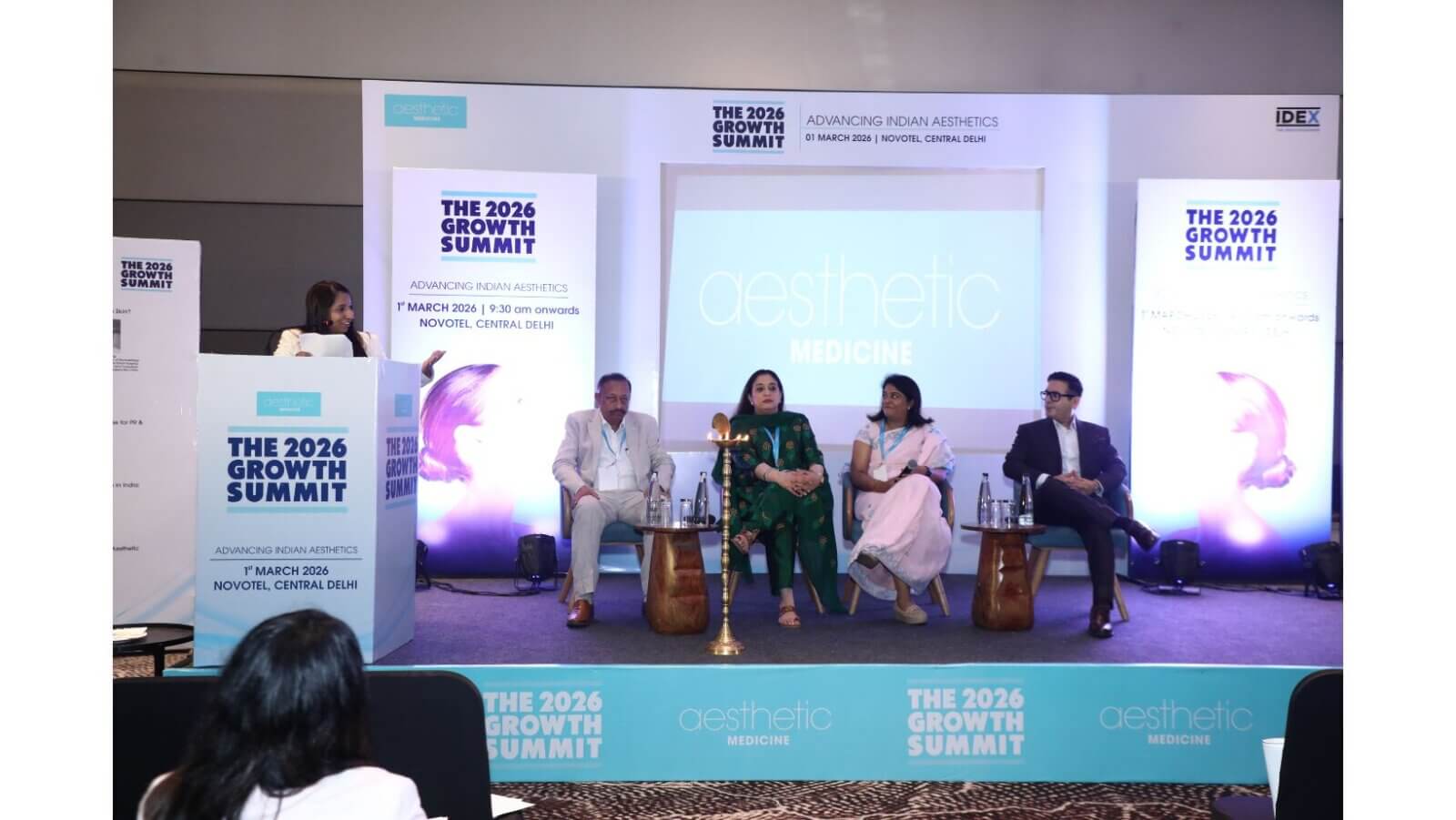
Aesthetic medicine and dermatology in India have undergone a significant transformation, driven by technological advancements, evolving patient expectations, and the influence of social media. Patients today are more informed, but often misinformed, by before-and-after images and online filters that set unrealistic standards. This creates a responsibility for clinicians to balance patient aspirations with ethical practice, ensuring clear communication, proper counselling, and realistic outcomes.
At the inaugural edition of the AMI Growth Summit 2026 in Delhi, some of India’s leading aesthetic medicine practitioners dissected the relationship between patient expectations, clinical outcomes, and the economics of running a modern clinic.
The psychology of the story vs. the clinical reality
The session opened with a fundamental discussion: patients’ requests rarely match their true desires. In the digital age, a patient does not just want a dermal filler; they want the confidence of the influencer they follow.
Dr Chiranjiv Chhabra, Founder & Medical Director, Alive Wellness Clinics India, noted that long before the patient sits in the clinical chair, the story begins. “I believe that patients come to solve their pain points, and they want a clinical outcome,” she explained. “But in their minds, they are looking for transformation.”
This gap between expectation and medical reality is becoming more pronounced as social media increasingly shapes perceptions of beauty and treatment outcomes. Patients may arrive at clinics expecting dramatic changes inspired by curated online images, making the role of the doctor as an educator more critical than ever. She emphasised that the doctor’s primary role today is to be as much a psychological counsellor as a practitioner. “Sometimes, there can be a small gap between what they actually want and what they feel they want. We have to bring their desires down to more realistic measures.”
The body dysmorphia trap
The gap between the social media story and the surgical reality can be dangerous. Dr Anup Dhir, Plastic, Cosmetic and Reconstructive Surgeon, highlighted the rising incidence of body dysmorphic disorder (BDD), fuelled by the relentless perfection of digital feeds. “Social media raises patients’ expectations. Some patients demand surgery for perceived deformities that are not real. Normally, we would only operate if the deformity were visible from a social distance of 5 ft,” he said.
Before-and-after images have also become one of the most powerful marketing tools in aesthetic medicine. However, their influence must be managed responsibly.
Dr Indu Ballani, Cosmetic Dermatologist, Ballani Skin Aesthetics, explained that such visuals can play an important role in helping patients understand realistic outcomes. “Patients need to see the results they can expect. But we must also explain the timeframe and number of sessions required. Social media often makes it look like a one-session transformation.” Proper counselling, she emphasised, is necessary to ensure that patients understand the treatment journey rather than expect instant results.
Ethics in the age of filters
Few issues sparked stronger opinions than the misuse of digital filters and manipulated imagery in clinic marketing.
Dr Pankaj Chaturvedi, Co-Founder, MedLinks, a popular doctor on social media who ironically admitted to disliking the platform’s current state, was vocal about the unethical clinics that use technology to lie. “I know many influencers whose profiles do not contain a single real picture,” he stated. “Patients come with those photos and say, ‘This is what I want.’ Then I show them that getting that result is actually very easy – and they won’t even need to spend a penny. Just use the same filter.”
The economics of a fake story are enticing: a morphed photo can drive hundreds of leads. But Dr Anup argued that this is a bankrupt business model.
“You may attract a patient by showcasing a fake result, but what will you do when the time comes to deliver that outcome? Honesty ultimately yields benefits. You may lose a few patients initially to the clinic promising miracles, but eventually they will realise you were the one telling the truth.”
The hard economics of innovation
Beyond the ethical considerations of storytelling, the harsh realities of clinic finance emerge. High-end aesthetic medicine is incredibly capital-intensive. With energy-based devices (EBDs) costing upwards, the pressure to generate an ROI can sometimes push clinics toward aggressive and occasionally unnecessary sales tactics, which may compromise patient care and ethical standards in the pursuit of financial gain.
How do you measure the success of a new machine? For Dr Chiranjiv, the metric is clear. “Ideally, any machine should deliver returns within four to six months. Otherwise, it is not worth having. It is not just a toy for fun.”
To get additional insights from leading experts featured in this discussion, read The real economics of aesthetic treatments in India in the January–March Edition of Aesthetic Medicine India magazine, page no. 24. CLICK HERE to read more.